
“You know how it feels for your native tongue to slip away. You caught it in time. I didn’t.” — R. F. Kuang, Babel
I love language. I love learning different languages and I love being able to make the connection between common words in other languages. I feel a sense of pride when an author writes a dialogue in a language I speak and I understand it without issue, I love that I can read some of the world’s greatest works in their original language without having to worry about what’s lost in translation. However, I’m plagued by an issue, this pebble in my shoe that won’t leave no matter how much I try to get it out: who am I when I’m not speaking?
Is my real personality the one that comes out when I speak Turkish? French? English? Portuguese? Spanish? Why is it that I’m told I’m shy in French and Portuguese but bold in Turkish and English? Am I a combination of both? Is that even possible?
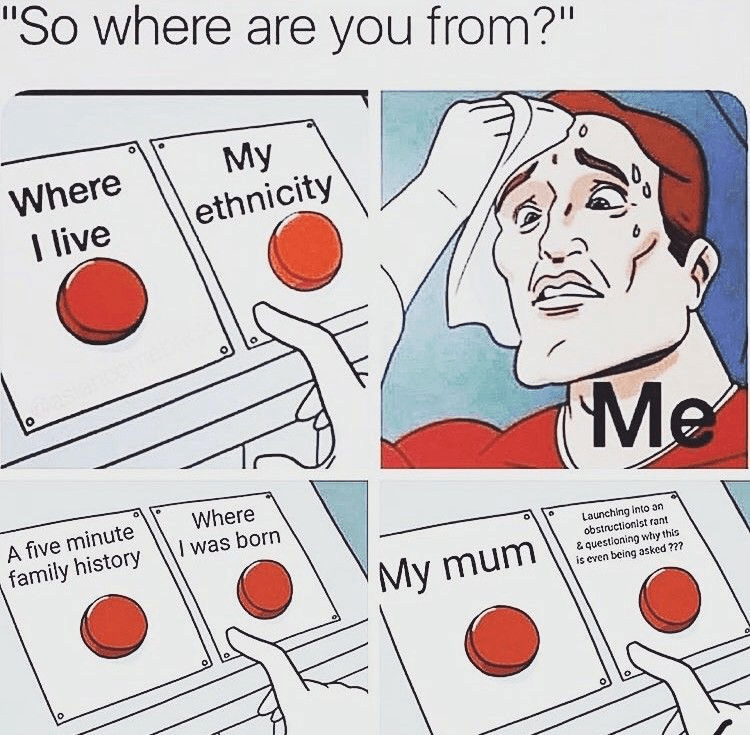
Recently, I found a video of me speaking Turkish on my phone. The video dates back to 2019 and I’m filming my sister standing on a swing, telling her to be careful. I showed the video to my friend who’s first thought was to say “Gurbetci gibi konuşuyorsun” You speak like a diaspora kid.
Technically it’s not a lie, I am at the end of the day, a diaspora kid, but the implications that came with it hurt. I haven’t lived in Türkiye for 10 years now, I’ve gone back once or twice a year of course but it was never for as long as it should’ve been. Over my years abroad, I lost contact with my childhood friends. I hadn’t figured social media out when I first moved so most of my friendships fizzled out quite quickly and I lost connection with anyone I wasn’t related to. I’d notice that something had changed whenever I’d come back: a new building, a mall that used to be a park, a tree I used to climb all the time had been cut down… After a while, I felt like my country was moving on without me and words that once formed naturally felt foreign in my mouth. I had developed an accent in my own native tongue and slowly but surely, I had stopped thinking in Turkish and dreaming in it altogether. I cried the first time I realised that.
Slowly but surely, English had replaced my native language. I started speaking it, reading it, studying it, dreaming it. It took over my mind despite my every protest and became the primary language I used to communicate with the world around me. All of my friends were from different backgrounds and being in an international school, English was our common language. I could feel my identity slipping through my fingers and at the time, I didn’t have the strength to clench them into fists. I mean even now, I barely ever write in a language besides English.
Everything changed when I came to university where I met Turkish people my age for the first time in years. It was very awkward at first, I couldn’t understand the memes they were referring to nor did I have the vocabulary to joke with them but with consistency I was able to feel connected to my culture again. There was just one issue: I don’t know how to explain it but after being abroad for so long, I feel like I don’t have a right to identify with Turkish-ness.
I noticed this for the first time when my mother asked me where “home” was and I told her I didn’t have one. Despite Türkiye being the country I’ve lived in for the longest, I can’t exactly say that I grew up there. On the other hand, Brazil, which I lived in from the ages of 12-18 fit that category despite me having lived there for way less time. I speak Portuguese, I understand Brazilian memes and most of my closest friendships were formed there, doesn’t that mean that Brazil is at least partly my home? Is that a betrayal to my country? Part of the reason for these doubts is definitely nationalism. In the past 20 years, Türkiye has been tumbling into fascism at a rapid pace, meaning anyone who didn’t 100% identify with it is immediately rejected. We can also observe this in anti-refugee and immigration sentiments that have skyrocketed in the past few years. The primary message being sent on both ends of the political spectrum is that if you aren’t with “us” against “them” at 100%, then you can go fuck yourself. We are told that citizenship isn’t what makes a Turk, neither is blood— but spirit, so what am I if mine is split?
I really relate to this line from Babel by R. F. Kuang because of this.
“My fluency is largely artificial. I don’t have memories in Chinese. I don’t dream in it. I’ve got the recall, I’ve got the language skills, but I can’t reliably make the bars work.”
I don’t live in Turkish anymore, I haven’t for a very long time. I used to live in English before moving to France and now I live in French. I feel like I lose a piece of my identity whenever I need to make the switch.
I hate to sound like a typical mixed/third culture kid trying to decide which box to fit it but these things truly do shape a person. I’m actually Franco-Turkish, my mother is half French and I got the nationality through her. To be honest with you, I’ve never felt French in my life. There were moments where I’d lie and say I was fully French to avoid bullying but besides that, I’ve never really identified with French-ness. Part of it is definitely because of the French side of my family were Racism Premium subscribers but most of it is just because I never really had a real connection to France and I’m fine with that. I have my papers, I get to travel visa-free to 185 countries, I get to take advantage of free education on all levels and I’m happy with just that. It’s strange to say but I feel more Brazilian than French, I’m actually working on getting my citizenship soon.
My point is: while France is the only country I’ve actively chosen to live in, I haven’t been able to make France my home yet. I think part of the reason why France and I have been constantly rejecting one another is because we’ll both only ever see me as a foreigner here. While I have French nationality, I have an accent when I speak French, I didn’t study in French schools, didn’t watch French movies or have French friends so really how French am I? The first time I ever even (consciously) step foot into this country was almost 3 years ago when I moved here for university and I’ve had one foot out the door ever since.
My intention has never really been to stay, my life goal has always been to travel for work so I gave up on the idea of having a physical “home” a long time ago. I’ve kind of considered home to be where my loved ones are and as of now, they’re spread across the world so at least I know I’ve got options when it comes to couch surfing in the future. I think it’s great that people can picture a place when they think of “home”, filled with childhood memories and loved ones they can see whenever they want, I’m quite jealous as someone who didn’t really have that. However, I also think there’s something quite freeing with not having that. I’m not tied down anywhere, I have no obligation to stay in one place or a fear of change, I can go wherever I want and see a friend or family member and I think there’s endless beauty in that. I want to keep exploring the world and keep meeting new friends, I don’t want one place or language to shape my identity— I want it all.
© 2026 C. H. Gökdemir. All rights reserved.


 Cece: Unfiltered
Leave a comment